Englisch
 Français
 Nederlands

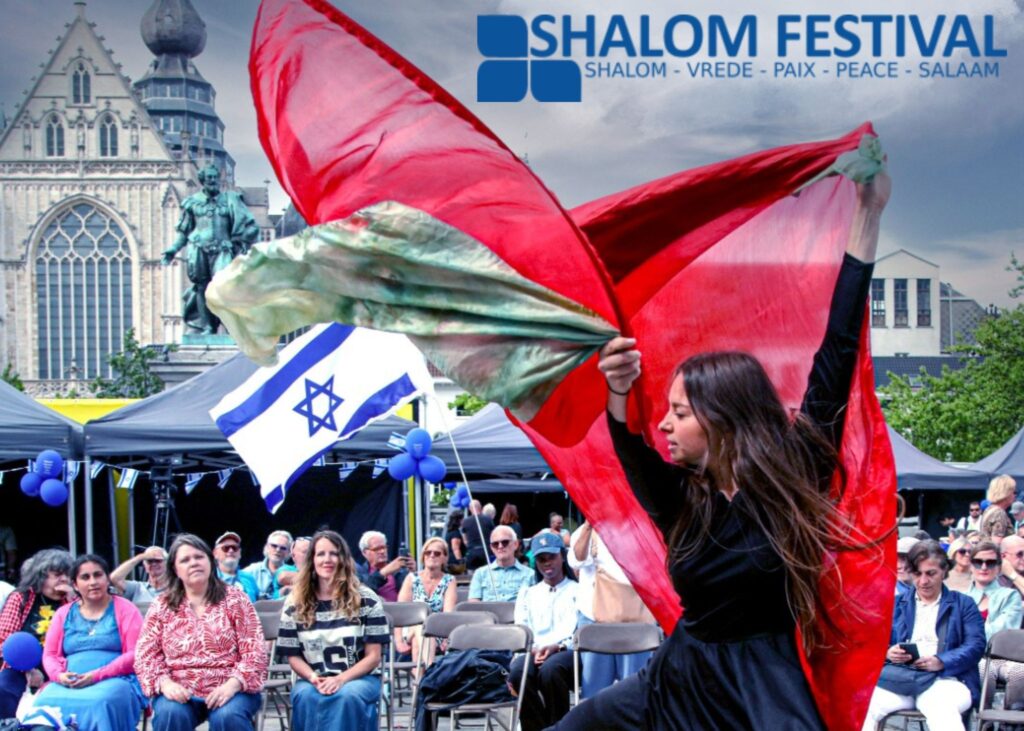
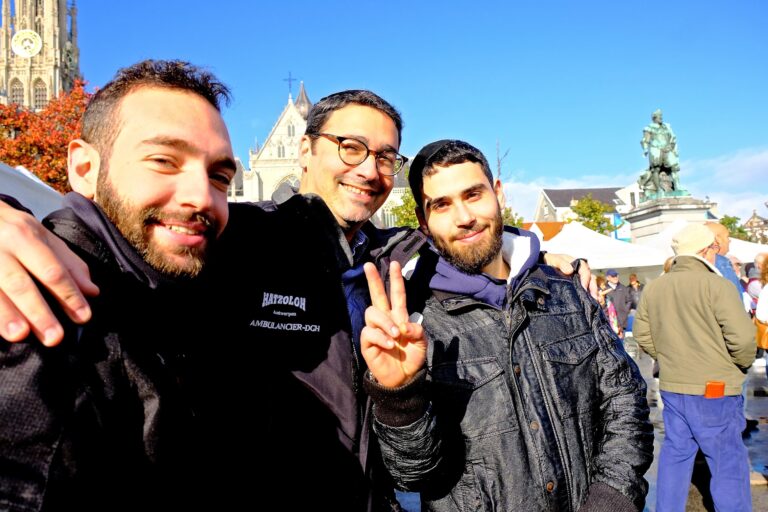
Shalom Festival Antwerp, 31 May 2026
A festival of peace held hostage by the terrorists of silence
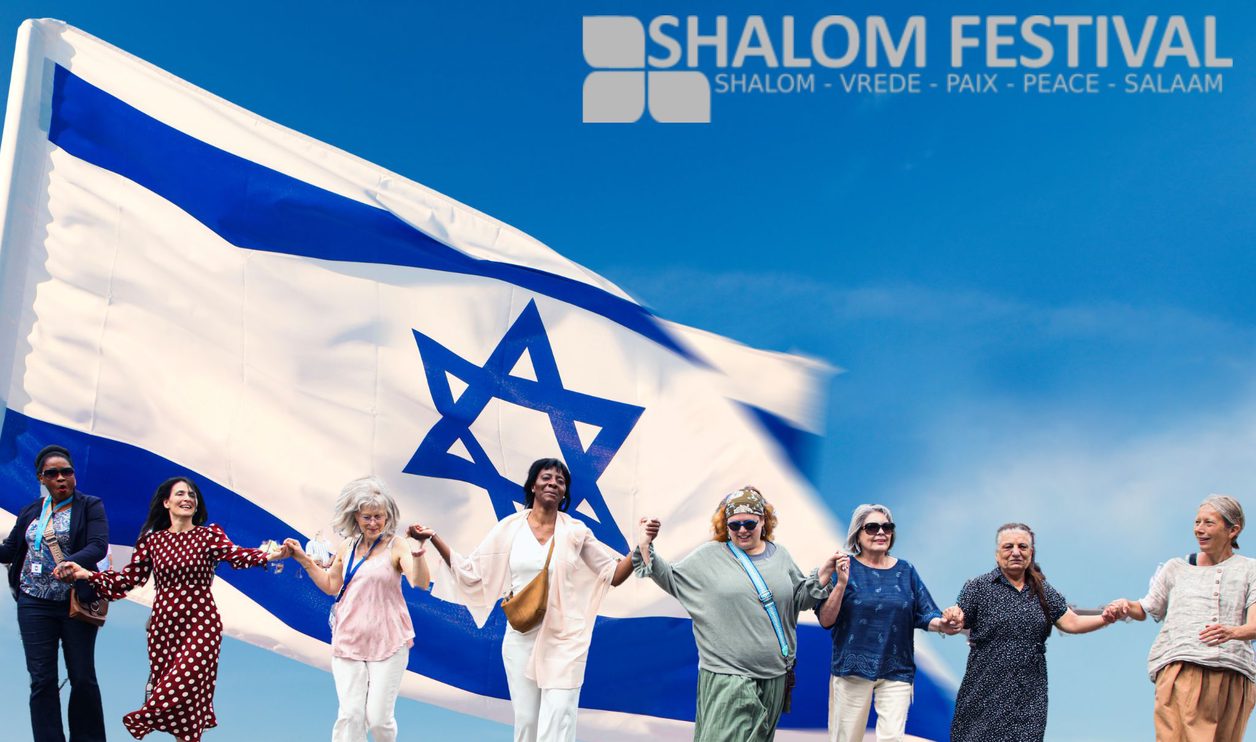
The Shalom Festival, held on 31 May 2026 in Antwerp, had one sole objective: to bring together Israelis, Palestinians, Iranians, Christians, Jews, Muslims, and, in short, free citizens of all beliefs and convictions around a principle as noble and as simple:
peace requires the courage to spreak to one another, especially and above all when it is dificult.
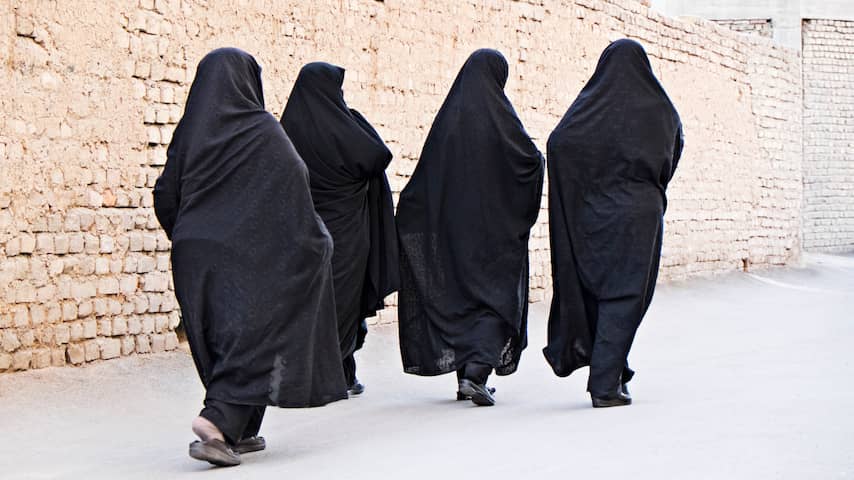
The event also sought to highlight a reality that is often ignored: the severe, frequently deadly persecution suffered by Christians in several Islamic countries. These persecutions have been documented by international NGOs, yet they remain largely absent from public debate in Europe and seem to attract little interest from the many self-proclaimed civic and activist movements that otherwise claim to champion every possible cause.
It must also be acknowledged that the current persecution of Christians stems from the same barbaric ideology and international networks that oppress the Iranian people—a people yearning for life and freedom but betrayed by autocratic rulers, who themselves constitute one of the world’s most significant recognized sources of radicalization.
A Demonstration to Prevent Dialogue
At the same time that the Shalom Festival was taking place, a pro-Palestinian demonstration was organized with the clear aim to disrupt the peace festival. Faced with this hostility, the president of the festival committee suggested what every democracy should encourage an open, public, transparent, calm, and genuinely adversarial debate in which everyone could present and defend their views.
The response or rather, the total absence of one amounted to a complete denial.
No discussion. No listening. Not even a willingness to hear what was being said only a few meters away. Nothing but contempt, accompanied by a chaotic mixture of war cries claiming every conceivable global cause at once, all wrapped in a cacophony of contradictions bordering on absurdity.
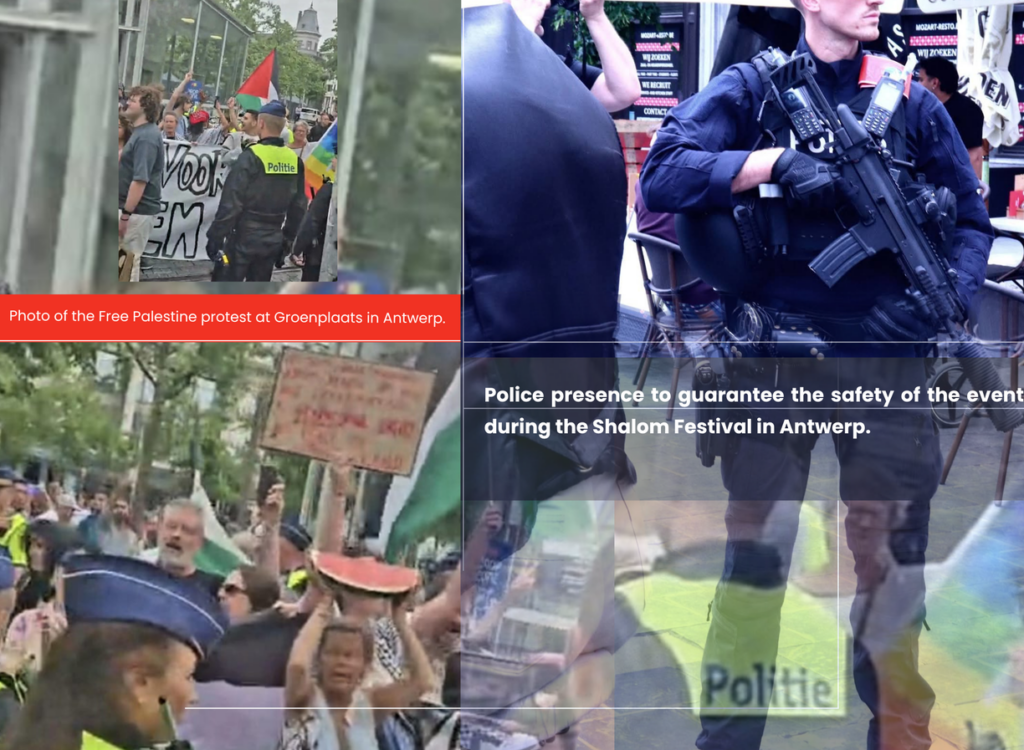
This refusal of debate, which unfortunately is becoming increasingly common and intense, is not merely a momentary outburst or an excess of zeal.
It is a deliberate attempt to seize control of the public sphere, to prevent alternative viewpoints from being expressed, and to impose a single vision through pressure, noise, and intimidation.
The all-encompassing demands voiced by participants also reveal the extent to which many have become subject to manipulation orchestrated by a handful of politicized organizations, often directed from abroad and fundamentally dangerous to humanity as a whole.
Intimidation as a method, democracy as the victim
What occurred in Antwerp illustrates a deeply troubling trend. What is commonly called cancel culture has become a political weapon aimed at silencing, erasing, and neutralizing any voice that refuses to conform.
This mechanism amounts to a form of terrorism: intellectual terrorism. It is not physical violence—at least not yet—but rather the fear of being insulted, the threat of being ostracized, and the determination to suffocate all nuance. Yet democracy rests upon two inseparable pillars: the freedom to speak and the right to be heard.
When either one is undermined, the entire system begins to crack.
The question therefore arises: what new world order, what ideology of death, hides behind this screaming beast?
“Let the reader understand!”
For after intimidation comes defamation; after intellectual terrorism come violence and oppression, along with the reign of the false prophet and his vile servants.
When slogans replace thought
Cancel culture thrives because it relies on crowds manipulated by simplistic slogans, catchphrases that eliminate the need to think, and above all by half-truths. This phenomenon is now amplified by social media, where instant outrage replaces analysis and complexity is sacrificed in favor of emotionally charged narratives.
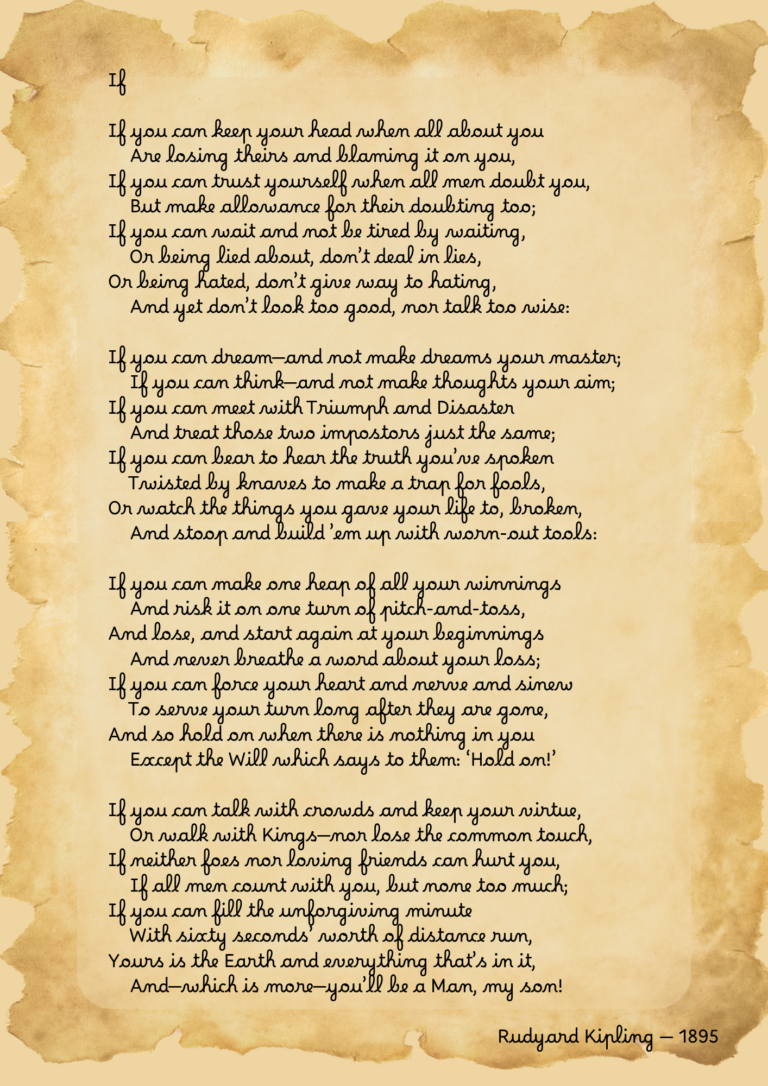
The men and women of today—those who refuse to remain “children, tossed to and fro and carried about by every wind of doctrine, by the cunning of men and their craftiness in deceitful schemes” (as the Apostle Paul so aptly writes in his Epistle to the Ephesians)—would do well to rediscover the values expressed in Rudyard Kipling’s famous poem If—, from which the following verses are drawn:
A totalitarian logic
In any case, history’s lessons are clear: all totalitarian ideologies begin by suppressing speech. Fascism and Stalinism alike first excluded dissenting voices, and then the individuals themselves.
First people are prevented from speaking; then they are prevented from existing; eventually, society ends up with camps or gulags.
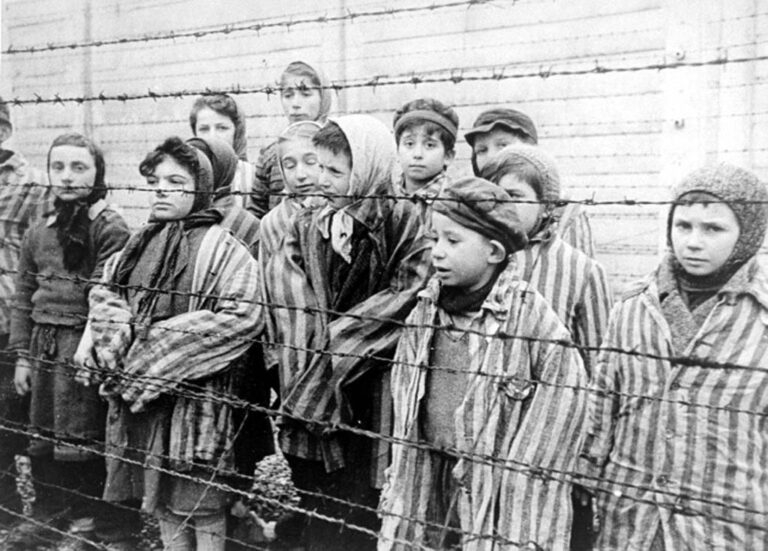
The mental framework is already in place: the desire to exclude, to silence, to dehumanize, all accompanied by that ever-present and nauseating undertone of antisemitism.
It is this mechanism that we must denounce before it is too late. Often attributed to Edmund Burke, the following statement remains prophetic:
“The only thing necessary for the triumph of evil is for good men to do nothing.”
And so, as Isaiah declared: “I will not keep silent.”
Who benefits from the crime?
A question therefore becomes unavoidable: who benefits from the refusal to engage in dialogue? Who has an interest in preventing speech?
One thing is certain: silence benefits neither peace, nor truth, nor freedom, nor democracy. As for those who refuse debate, they are not defending a cause; they are defending power—a diabolical power.
The media, or at least those who claim to be “free,” should be capable of distinguishing between competing narratives and allowing citizens to be fully informed, including through exposure to contradictory viewpoints. Sadly, corruption appears to have reached the sphere of information—not through ignorance, but through cowardice, in pursuit of ratings and in response to crowds crying, “Crucify him!”

Conclusion
Peace, truth, freedom, and democracy require courage not intimidation.
- Freedom of expression is non-negotiable.
- Dialogue remains the only credible path toward peace.
- Diversity of voices is a cornerstone of democracy.
- Intimidation will never replace thought.
Political, cultural, and civic leaders cannot simply wash their hands of the matter. They must urgently protect the space for debate, reject mob dynamics, and defend the fundamental right of people to meet and engage with one another—even, and especially, when they disagree.
And if passions crush reason beyond appeal, if debate is refused or controlled, then the creative and liberating Word (Logos) has been rejected—and it is already too late.
Hector Cornet d’Auquier